
“`html
The Death of Privacy: How Our Networks Sold Our Secrets
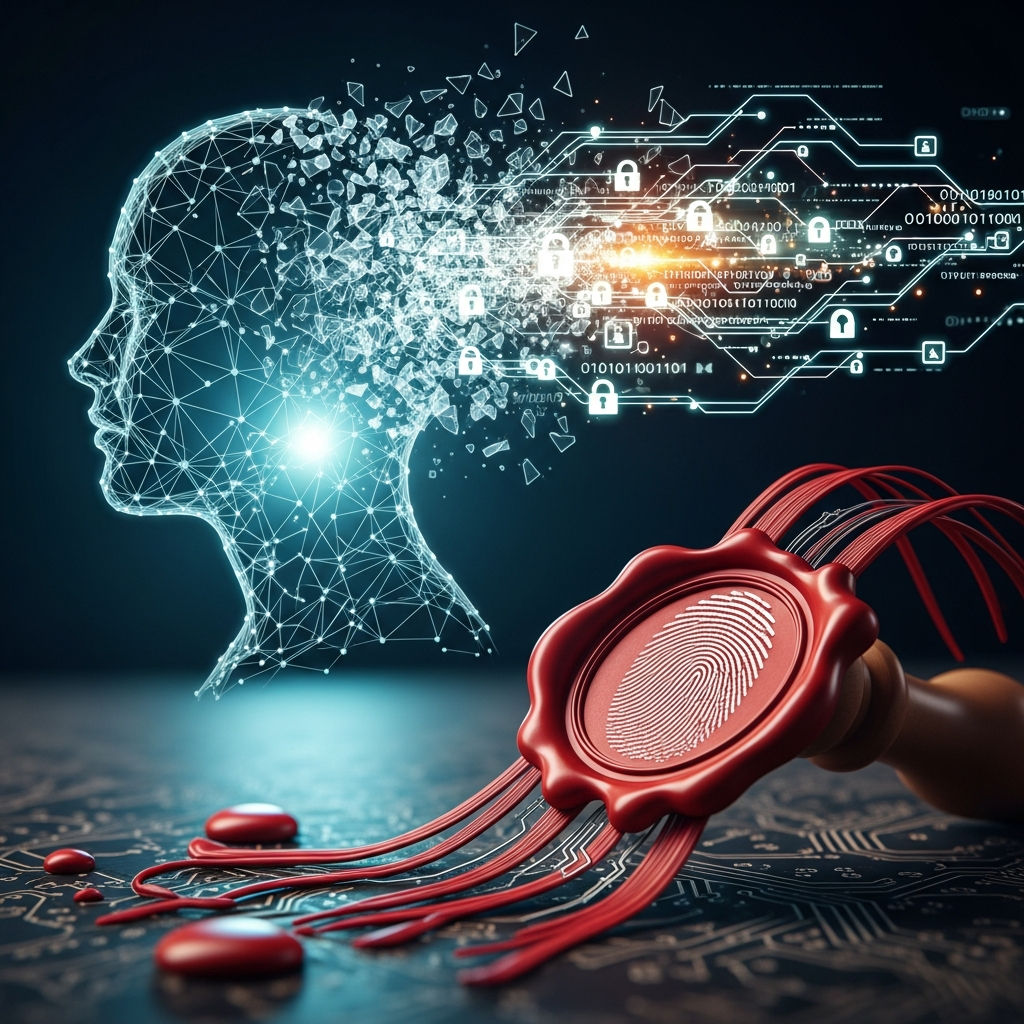
In the early days of the internet, the digital frontier was promised as a land of anonymity and freedom. Fast forward to the present day, and that promise has vanished. We are living through what many experts call “the death of privacy.” Every click, every movement, and every heartbeat captured by a wearable device is transformed into a data point, packaged, and sold to the highest bidder. But how did we get here? The answer lies within the very networks we rely on for connection.
The Illusion of the Digital Curtain
Most users operate under the “illusion of the digital curtain.” We believe that because we are sitting in a private room, behind a password-protected screen, our actions are confidential. However, the infrastructure of the modern web—the Internet Service Providers (ISPs), mobile carriers, and social platforms—acts less like a private tunnel and more like a glass corridor.
Privacy is no longer the default setting of our digital lives; it has become a premium feature, and in some cases, an impossibility. The transition from a “private citizen” to a “transparent consumer” was not an accident—it was a calculated business move known as surveillance capitalism.
Surveillance Capitalism: You Are the Product
The term “Surveillance Capitalism,” coined by scholar Shoshana Zuboff, describes a market logic where human experience is used as free raw material for translation into behavioral data. This data is then fed into machine learning algorithms to predict our future behavior. These predictions are traded in “behavioral futures markets.”
When you use a “free” service—whether it’s a search engine, a social network, or a navigation app—you aren’t the customer. You are the product being refined. Our networks have shifted from providing utility to harvesting identity.
The Silent Gatekeepers: ISPs and Mobile Carriers
While social media companies often take the brunt of the blame, your Internet Service Provider (ISP) is perhaps the most invasive entity in your digital life. Every packet of data you send or receive passes through their servers. While the content of your messages might be encrypted (thanks to HTTPS), the metadata remains visible.
- DNS Queries: Your ISP knows every website you visit, how long you stay there, and how often you return.
- Location Tracking: Mobile carriers track your physical movements via cell tower triangulation, often with more precision than GPS.
- Device Fingerprinting: Networks can identify the specific hardware you use, creating a unique “fingerprint” that follows you across different platforms.
The Rise of Data Brokers: The Invisible Middlemen
Most people have never heard of companies like Acxiom, CoreLogic, or Epsilon, yet these “data brokers” likely have a 3,000-page dossier on your life. These companies act as the middlemen of our secrets. They purchase raw data from networks, apps, and even public records to build comprehensive profiles on billions of people.
These profiles don’t just include your name and email. They include your political leanings, your likelihood of developing certain diseases, your financial stability, and even your relationship status. This information is then sold to advertisers, insurance companies, and even political campaigns to manipulate your choices.
The Privacy Paradox: Why We Give It Away
If privacy is so valuable, why do we give it away so easily? This is known as the “Privacy Paradox.” Surveys consistently show that users are deeply concerned about their digital privacy, yet their behavior tells a different story. We willingly trade our most intimate details for the sake of convenience.
We accept complex “Terms of Service” agreements that we never read. We install “smart” speakers that listen to our conversations in exchange for the ability to set a kitchen timer with our voice. We use biometric scans to unlock phones, handing over our most permanent biological markers to private corporations. The networks have made the cost of opting out so high—social isolation, professional disadvantage, and inconvenience—that most people feel they have no choice but to comply.

The Internet of Things (IoT): The Spy in Your Living Room
The death of privacy isn’t limited to our computers and phones. The “Internet of Things” (IoT) has brought surveillance into the physical world. Smart fridges, connected thermostats, and Wi-Fi-enabled security cameras are essentially network-connected sensors that monitor your domestic life.
A smart TV doesn’t just show you movies; it tracks what you watch and sells that data to advertisers. A smart vacuum creates a digital map of your home’s floor plan. When these devices are networked together, they create a 360-degree view of your private life that was once the stuff of dystopian fiction.
The Consequences: Beyond Targeted Ads
Many people argue, “I have nothing to hide, so why should I care?” This perspective ignores the systemic dangers of a world without privacy. The loss of privacy isn’t just about seeing an ad for shoes you just searched for; it’s about power dynamics and social control.
- Algorithmic Bias: Data collected by networks can be used to deny you a loan, increase your insurance premiums, or even filter you out of job applications based on “risk” profiles.
- Erosion of Free Will: When platforms know your psychological triggers, they can nudge your behavior in ways you don’t realize, from what you buy to how you vote.
- The Social Credit Trap: We are seeing the emergence of informal “social credit scores” where your digital footprint determines your access to services and social circles.
Can We Reclaim Our Secrets?
Is privacy truly dead, or can it be resurrected? While the “genie is out of the bottle,” there are steps individuals and societies can take to push back against the total erosion of the private self.
1. Use Encryption and Privacy Tools
Encryption is the most powerful tool we have. By using end-to-end encrypted messaging apps like Signal and using a Virtual Private Network (VPN) to mask your IP address, you can hide your data from the “pipes” of the network.
2. Legislative Action
Regulations like the GDPR in Europe and the CCPA in California are first steps toward giving users rights over their data. However, legislation often moves at a snail’s pace compared to technological advancement. We need robust “Privacy by Design” laws that force companies to minimize data collection from the start.
3. Shifting the Business Model
The ultimate solution is a shift away from the “data-for-service” model. We must support platforms that prioritize privacy, even if it means paying for a service with money rather than our personal secrets.
The Final Verdict
The death of privacy was not a single event, but a slow bleed. Our networks—the very tools that were supposed to connect and empower us—have been weaponized into the most sophisticated surveillance apparatus in human history. Every time we log on, we are participating in a system designed to strip us of our secrets.
Reclaiming privacy will require more than just changing our settings; it will require a fundamental rethink of how we value the “private self” in a hyper-connected world. If we don’t act, our secrets won’t just be sold—they will be used to build a world where the concept of a “private thought” no longer exists.
“`