“`html
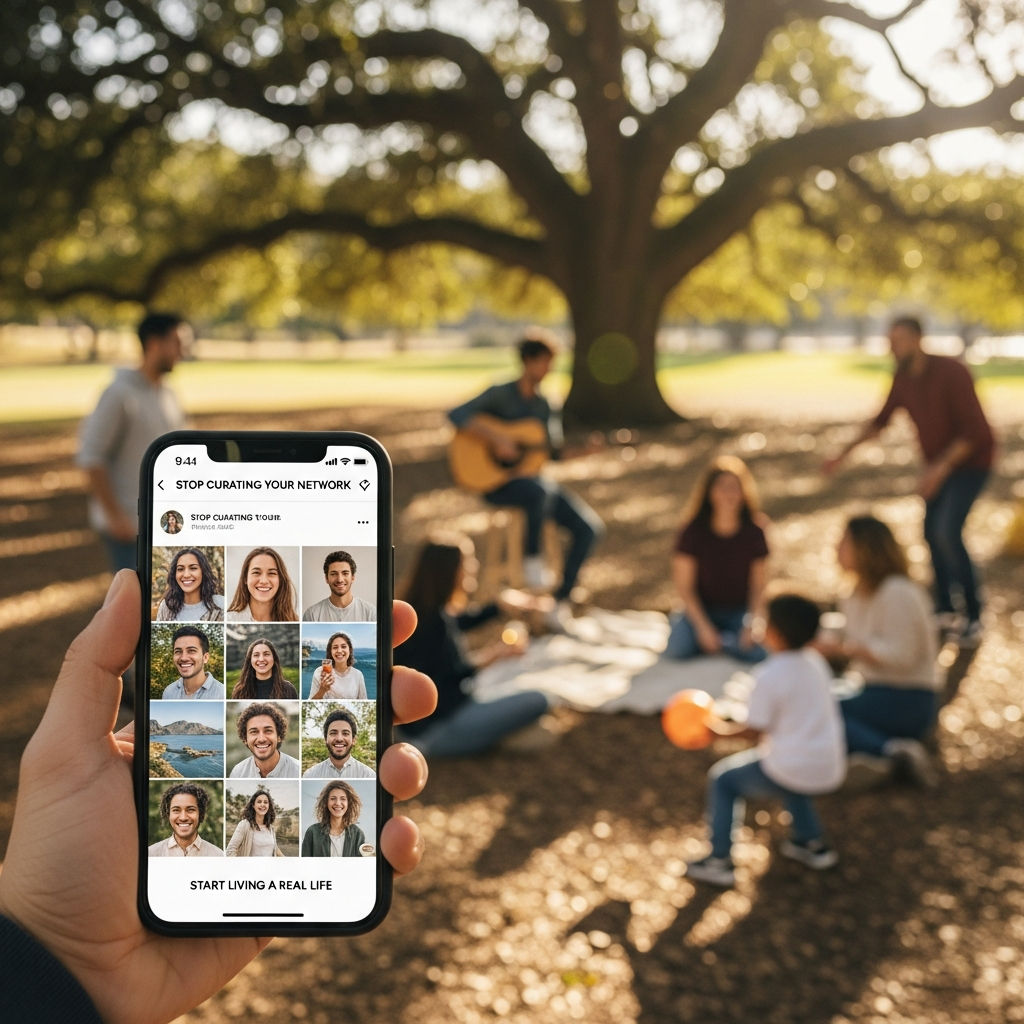
Stop Curating Your Network and Start Living a Real Life
We live in an era where our lives are often viewed through a lens—literally and metaphorically. From the perfectly angled brunch photo to the strategically worded LinkedIn update, we have become the creative directors of our own digital personas. We don’t just have friends anymore; we have “followers.” We don’t just meet people; we “build a network.”
But while we are busy curating a gallery of a life well-lived, many of us are missing the actual experience of living. The pressure to maintain a polished, professional, and perpetually “on” presence is leading to unprecedented levels of burnout, loneliness, and existential fatigue. It is time to stop curating your network and start living a real life.
The Illusion of the Perfect Network
Curating a network is the act of treating human relationships like a collection of assets. We follow people because they are “influential,” we accept requests because we might “need a favor later,” and we post content designed to elicit a specific reaction. This transactional approach to human connection turns our social circles into a performative stage.
The problem with a curated network is that it is fragile. It is built on the foundation of what we want people to see, rather than who we actually are. When you curate your network, you are essentially creating a digital museum of yourself—beautiful to look at, but cold and untouchable. You end up surrounded by people who know your “brand,” but very few who know your heart.
The Rise of Algorithmic Anxiety
Modern social platforms are designed to reward curation. The algorithm doesn’t care about your soul; it cares about your engagement metrics. This creates “algorithmic anxiety,” a state where we subconsciously tailor our real-world experiences to fit digital expectations. We stop going to a park to enjoy the trees and start going because the lighting is perfect for a post about “mindfulness.”
The Hidden Cost of Constant Curation
When you spend your energy managing how you are perceived, you have very little energy left for actual perception. Curation comes with a heavy psychological price tag:
- The Comparison Trap: When you view others’ curated lives, you inevitably compare your “behind-the-scenes” footage to their “highlight reel.”
- Emotional Exhaustion: Maintaining a persona is a full-time job. It requires constant monitoring of trends, comments, and metrics.
- Loss of Spontaneity: Real life is messy, unpredictable, and often “un-Instagrammable.” If you only value what fits your aesthetic, you miss out on the raw beauty of the unexpected.
- Isolation: You can have 5,000 “connections” and still feel completely alone because none of those connections are rooted in vulnerability.
Moving from “Networking” to “Connecting”
There is a fundamental difference between networking and connecting. Networking is about what you can get; connecting is about who you can be. To live a real life, we must shift our focus from building a platform to building a community.
Real connections are built in the “un-curated” moments. They happen during a late-night conversation when you’re tired and unpolished. They happen when you admit you don’t have all the answers. They happen when you show up for someone, not because it looks good on a timeline, but because they need you.
Embrace the Messiness of Reality
Life is not a series of high-definition slides. It is a chaotic, loud, and often confusing journey. When you stop curating, you give yourself permission to be messy. You allow yourself to fail publicly, to look “unprofessional” occasionally, and to change your mind. This authenticity is the magnet that attracts real, lasting relationships.
Practical Steps to Reclaim Your Real Life
Breaking the habit of curation isn’t easy, especially when our phones are constantly nudging us to “share an update.” However, you can reclaim your reality with a few intentional shifts in behavior:
1. Implement a “No-Post” Zone
Identify experiences that are “just for you.” Whether it’s your morning coffee, a walk in the woods, or a dinner with your partner, decide that some things will never be shared online. This preserves the sanctity of the moment and ensures you are fully present.
2. Prioritize Depth Over Breadth
Instead of trying to reach thousands of strangers, focus on deepening your relationship with five people. Call a friend instead of liking their photo. Meet for coffee instead of sending a LinkedIn message. Real-life impact is measured in depth, not reach.
3. Practice Vulnerability
Curation is a form of armor. Vulnerability is taking that armor off. Share a struggle or a doubt with someone you trust. You’ll find that people are much more drawn to your humanity than your perfection.
4. Audit Your Digital Circle
Go through your “network” and ask yourself: “Does this person inspire me, or do they make me feel inadequate?” Unfollow or mute accounts that trigger the urge to perform or compare. Curate your feed to serve your mental health, not your ego.
The Beauty of Being Present
When you stop worrying about how your life looks to others, you finally start seeing what it looks like to you. You notice the way the light hits the floor in the afternoon. You hear the nuance in a friend’s voice. You feel the texture of the world around you.
Living a real life means being okay with being “unseen” by the masses so that you can be truly “known” by a few. It means trading the dopamine hit of a notification for the long-term fulfillment of a shared memory. It means realizing that your value is not a commodity to be traded in the marketplace of attention.
Conclusion: The Courage to Be Real
Stopping the curation of your network requires a certain kind of courage. It is the courage to be boring, to be quiet, and to be yourself. In a world that demands we be “personal brands,” being a person is a radical act.
Your network isn’t a net to catch opportunities; it’s a web of support to hold you through life’s ups and downs. Don’t spend your life building a digital monument to a person who doesn’t exist. Put down the phone, look the person across from you in the eye, and start living the life that happens when the screen goes dark.
After all, the most important moments of your life will never be captured in a post. They will be captured in your heart.
“`